
Summer is all about backyard living: firing up the grill, gathering with family, and spending long afternoons by the pool. But while most homeowners stay on top of their pool water chemistry, there’s one area that often gets overlooked: the pool deck and surrounding surfaces.
Keeping your pool area clean goes far beyond balanced chlorine levels and a skimmer net. The surfaces around your pool, whether concrete, pavers, stone, or tile, take a serious beating every summer. And if you have a saltwater pool, the challenges go even further. Investing in regular pool deck pressure washing isn’t just about appearances. It’s about safety, longevity, and protecting one of your biggest home investments.
Here’s why pool deck cleaning should be a top priority this summer season.
Why Do Pool Decks Get So Dirty During the Summer?
Increased Foot Traffic, Sunscreen, and Body Oils
The moment summer hits, your pool deck becomes the most-used surface on your property. Kids running in and out, adults lounging in chairs, guests arriving for weekend get-togethers, all of that activity adds up fast.
Every person who steps onto your deck brings sunscreen, body oils, dirt, and debris with them. These substances don’t just sit on the surface; they seep into the pores of concrete, pavers, and natural stone. Over time, they create a grimy film that regular hosing simply can’t remove.
Leaves, Dirt, and Organic Debris
Summer also means trees in full bloom and thunderstorms that scatter leaves, pollen, and dirt across your outdoor spaces. When wet leaves sit on a pool deck, they break down and leave dark stains. Pollen settles into grout lines and surface cracks. Dirt gets tracked in from every direction. Without consistent cleaning, this organic matter becomes the perfect breeding ground for mold, mildew, and algae.
Hot, Humid Climate Makes it Worse
Here’s something homeowners know well: our North Carolina summers are brutally humid. That combination of heat and moisture creates ideal conditions for biological growth. Algae, mold, and mildew thrive in warm, damp environments, and your pool deck, constantly wet from splashing and rain, checks every box.
If you’ve noticed green or black streaking on your deck or a slippery film underfoot, that’s algae and mildew taking hold. Left untreated, these growths spread quickly and become much harder to remove without a deep pressure washing pool deck treatment.
The Saltwater Problem: Salt Buildup on Deck Surfaces
How Does Salt Residue Accumulate on Pool Decks?
Saltwater pools have exploded in popularity across the Charlotte area, and for good reason. They’re gentler on skin and eyes, easier to maintain chemically, and increasingly cost-effective. But they come with a unique maintenance challenge that many homeowners don’t anticipate: salt residue on pool deck surfaces.
Every time water splashes out of a saltwater pool, it carries dissolved salt with it. As that water evaporates in the summer heat, it leaves salt crystals behind on your concrete, pavers, or stone. Over time, this buildup becomes visible as a white, chalky residue.
What Does Salt Water Do to Deck Surfaces?
Salt residue isn’t just ugly; it’s physically damaging. Here’s what it does to common pool deck materials:
- Concrete: Salt accelerates a process called spalling, where the surface begins to flake and pit. Over the years, this can cause serious structural deterioration.
- Pavers: Salt works into the joints between pavers, breaking down the sand or polymeric filler that holds them in place.
- Natural Stone: Porous materials like travertine and limestone are especially vulnerable. Salt crystals expand and contract with temperature changes, causing cracking from within.
- Grout and Mortar: Salt degrades the bonding agents between tiles and stones, leading to loosening and shifting.
Saltwater pool maintenance must include regular attention to surrounding surfaces, not just the water itself. A professional service to pressure wash pool surrounds is the most effective way to remove salt buildup before it causes lasting structural damage.
How Do Algae, Mold, and Mildew Affect a Pool Area?
Appearance
Let’s be honest: a green, stained, or grimy pool deck doesn’t exactly set the mood for a summer party. Algae, mold, and mildew make even a well-designed outdoor space look neglected. Dark streaks, green patches, and general discoloration are telltale signs that your deck needs professional algae removal.
Safety: Slippery Surfaces & Slip-and-Fall Risks
This is the concern that should get every homeowner’s attention. Algae and mildew create a slick biofilm on hard surfaces that becomes extremely slippery when wet, which is every moment your pool deck is in use.
Wet pool decks are already a slip hazard. Add a layer of algae or mildew, and you have a serious risk of injury. Children running to the pool, adults carrying drinks, or elderly guests navigating the space can easily fall on a contaminated surface. Thorough pool deck pressure washing physically removes these organisms from the surface, restoring traction and significantly reducing the risk of injuries.
Lifespan of Your Pool Deck
Pool deck installation isn’t cheap. Whether you have stamped concrete, natural stone pavers, or tile, you’ve made a significant investment in your outdoor living space. Organic growth and salt buildup both accelerate surface degradation.
Algae and mold retain moisture against the surface, which contributes to cracking and erosion. Salt damages the structural integrity of the material itself. Combined with our freeze-thaw cycles in winter and scorching heat in summer, an unmaintained deck ages quickly. Routine concrete cleaning and surface maintenance extend the functional life of your deck by years, saving you thousands in premature repairs or replacement.
How Often Should You Clean Your Pool Deck?
There’s no one-size-fits-all answer, but here are general summer cleaning schedule recommendations for local homeowners:
- Monthly cleaning is ideal during peak summer months (June through August), especially if your pool sees heavy use or you host frequent gatherings.
- Every 6–8 weeks works well for moderate-use pools with light foot traffic.
- Before and after major events, a professional cleaning before a summer party and right after the season ends keeps your deck in prime condition year-round.
- Saltwater pool owners should consider monthly cleanings as a baseline, given the ongoing salt accumulation on surrounding hardscapes.
Take Note: If you notice visible algae growth, white salt staining, or slippery spots at any point, don’t wait for your scheduled appointment; address the buildup promptly to keep swimmers safe.
Pool Deck Pressure Washing vs. DIY Cleaning
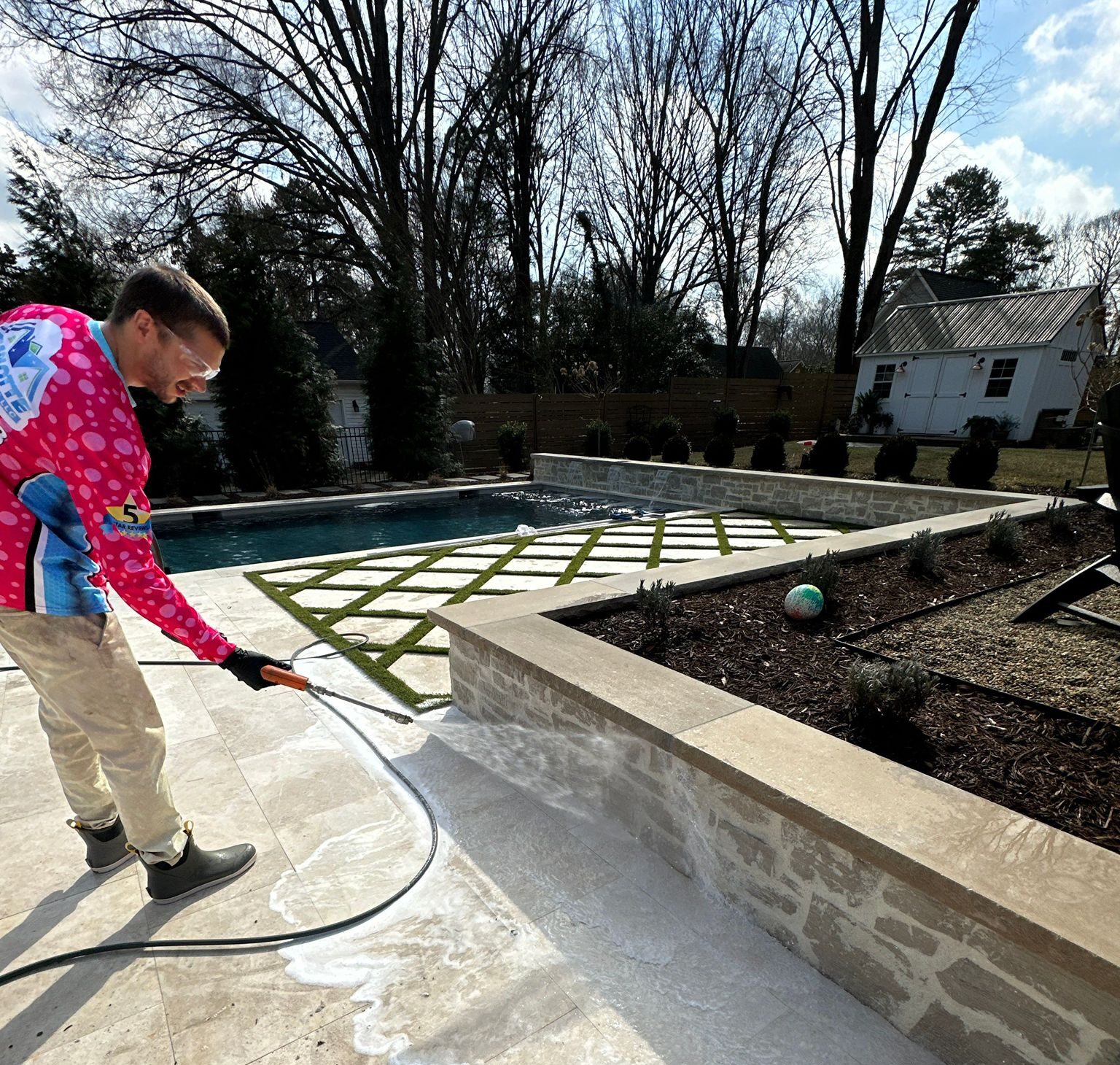
It’s tempting to rent a pressure washer and tackle the job yourself. However, choosing a specialized team to pressure wash pool decks offers distinct advantages that DIY simply can’t match:
- Correct Pressure Settings Matter: Using too much pressure on pavers, natural stone, or older concrete can etch, crack, or erode surfaces permanently. Professionals understand the right PSI for each material and adjust their equipment accordingly.
- The Right Cleaning Agents Make a Difference: Algae, mold, and salt each require specific treatment solutions. Professionals use commercial-grade, surface-appropriate detergents that penetrate and neutralize these contaminants without damaging your deck.
- Coverage and Consistency: Professional equipment covers large areas evenly and efficiently. DIY work often leaves streaks, missed spots, or uneven “wand marks” etched into the stone.
- Time Savings: A job that takes a homeowner a full Saturday to complete imperfectly takes a professional crew a fraction of the time, done right the first time.
Protect Your Investment This Summer
Your pool area is one of the most-used and most-valued parts of your home during the summer months. A clean, well-maintained deck enhances the enjoyment of your outdoor space, keeps your family and guests safe, and protects the long-term integrity of your surfaces. Whether you have a traditional chlorine pool or a saltwater system, a deep pressure washing pool deck treatment should be a regular part of your summer home maintenance routine, not an afterthought.
At Charlotte Exterior Services, we specialize in professional power washing for pool decks, patios, driveways, and all exterior surfaces. We understand the unique challenges of our local climate and know how to treat every surface type safely and effectively.
Don’t wait until the green streaks appear or someone slips. Give your pool area the attention it deserves, and enjoy a cleaner, safer, more beautiful outdoor space all summer long.
Pool Deck Pressure Washing FAQs
How Often Should I Pressure Wash My Pool Deck?
During summer, we recommend professional pool deck cleaning at least once a month for high-use pools or every 6–8 weeks for lighter use. Saltwater pool owners benefit from more frequent cleanings due to ongoing salt residue accumulation.
Is Pressure Washing Safe for All Pool Deck Surfaces?
Yes, when done correctly. Concrete, pavers, natural stone, and tile all have specific requirements. Professional pressure washing services use appropriate low-pressure soft washing techniques and targeted detergents for delicate materials to prevent erosion or cracking.
How Does Salt From my Saltwater Pool Damage the Surrounding Deck?
When splashed saltwater evaporates, it leaves salt crystals behind. These crystals work into the pores of concrete, pavers, and stone, expanding and causing cracking, pitting, or spalling. Salt also rapidly breaks down grout and joint sand.
Can Pressure Washing Really Prevent Slips and Falls Around the Pool?
Absolutely. Algae, mold, and mildew create an invisible biofilm on wet surfaces that dramatically reduces traction. Physically removing these organisms completely restores the natural grip of your concrete or stone.
What’s the Difference Between DIY Pressure Washing and Hiring Charlotte Exterior Services?
Equipment and expertise. We use commercial-grade rotary surface cleaners that eliminate striping, paired with specialized cleaning agents that completely neutralize organic growth and salt-form deposits without harming your landscape.