Your roof is one of the most important and most expensive parts of your home. So when
you start noticing those dark streaks and black staining across your shingles, it’s
understandable to wonder: Is it safe to wash a roof? And if so, how?
What’s Causing Those Black Streaks?
Those dark streaks on asphalt shingles aren’t just dirt. They’re caused by a type of
algae called Gloeocapsa Magma. It’s airborne, spreads easily, and feeds on the
limestone filler in asphalt shingles. Left untreated, it can shorten the lifespan of your roof
and lead to premature shingle deterioration.
Why You Should Never Pressure Wash a Roof
High-pressure washing on a roof is a bad idea, full stop. Asphalt shingles have a layer
of protective granules on the surface. Those granules are what protect the shingle from
UV damage and weathering. High-pressure water blasts those granules off, effectively
aging your roof years in a single cleaning session. You could also force water under the
shingles, leading to leaks and moisture damage in your attic.
The Right Way: Soft Washing
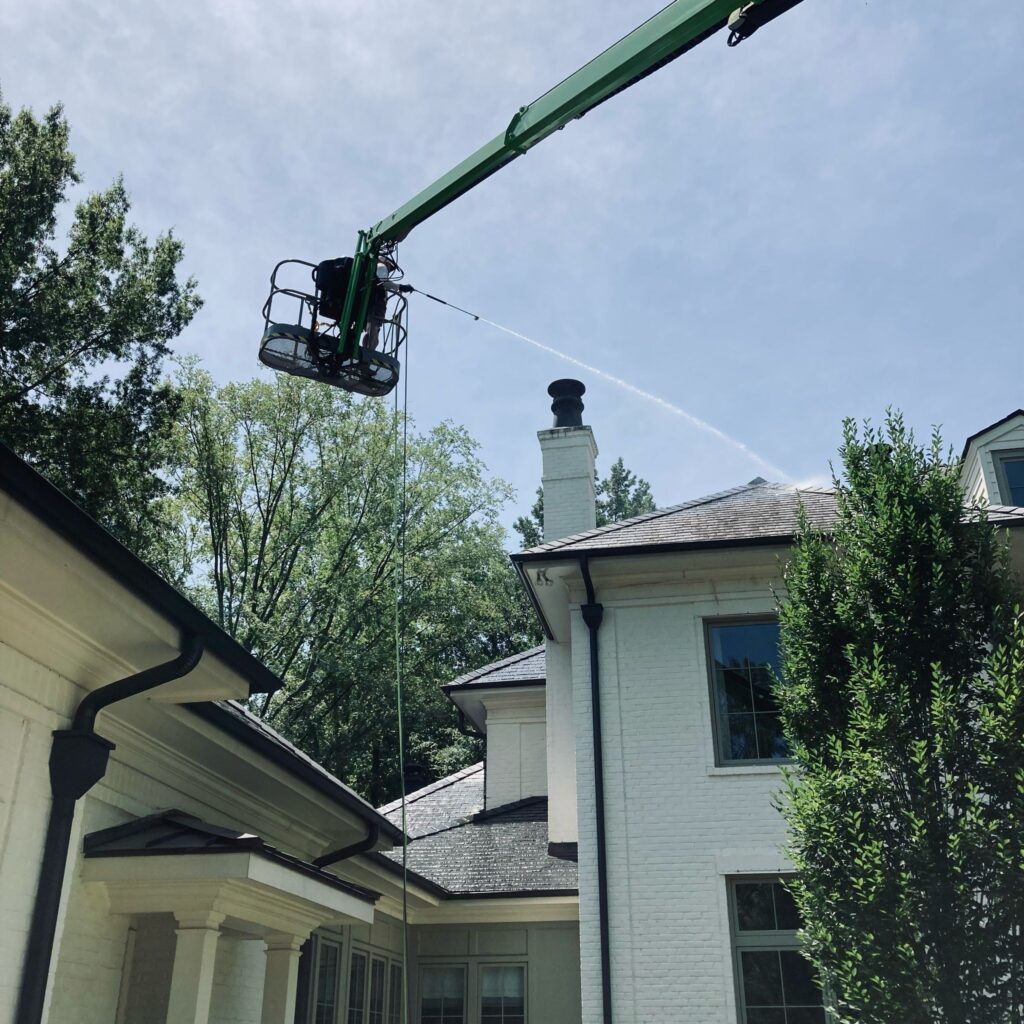
Roof washing should always be done with a soft wash system, low pressure, usually
under 100 PSI, combined with a professional-grade cleaning solution. The solution is
applied to the roof, left to dwell for a period, and then gently rinsed off. This kills the
algae, moss, and lichen without touching the granules or forcing water under the
shingles.
The Asphalt Roofing Manufacturers Association (ARMA) actually recommends
low-pressure cleaning with cleaning solutions as the correct method for treating
algae-stained roofs. It’s not just safer, it’s the manufacturer-approved approach.
How Often Does a Roof Need Washing?
In humid climates like Charlotte, roof algae can return within a couple of years if left to
its own devices. Charlotte Exterior Services uses a soft wash treatment that typically
keeps regrowth at bay for two to four years, depending on your roof’s exposure to shade
and moisture. Some cleaning solutions include zinc compounds that continue to inhibit
algae growth for an extended period after treatment.
The bottom line: yes, roof washing is safe when it’s done with the right method. Low
pressure, proper chemicals, and a professional who knows what they’re doing.